
Description
By (author) Morse, Julia C. Description:
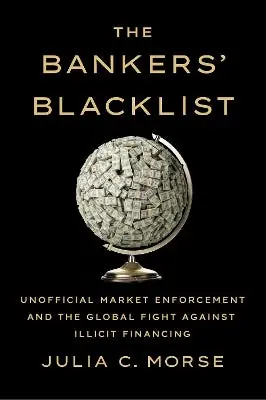
In The Banker”s Blacklist, Julia C. Morse demonstrates how the Financial Action Task Force (FATF) has enlisted global banks in the effort to keep “bad money” out of the financial system, in the process drastically altering the domestic policy landscape and transforming banking worldwide.
Trillions of dollars flow across borders through the banking system every day. While bank-to-bank transfers facilitate trade and investment, they also provide opportunities for criminals and terrorists to move money around the globe. To address this vulnerability, large economies work together through an international standard-setting body, the FATF, to shift laws and regulations on combating illicit financial flows. Morse examines how this international organization has achieved such impact, arguing that it relies on the power of unofficial market enforcement—a process whereby market actors punish countries that fail to meet international standards. The FATF produces a public noncomplier list, which banks around the world use to shift resources and services away from listed countries. As banks restrict cross-border lending, the domestic banking sector in listed countries advocates strongly for new laws and regulations, ultimately leading to deep and significant compliance improvements.
The Bankers” Blacklist offers lessons about the peril and power of globalized finance, revealing new insights into how some of today”s most pressing international cooperation challenges might be addressed.
Table of contents:
Introduction: Cross-Border Banking in a Globalized Era 1. A Primer on International Financial Standards on Illicit Financing 2. A Theory of Unofficial Market Enforcement 3. The FATF”s Fight against Illicit Financing 4. How the Noncomplier List Drives FATF Compliance 5. Unofficial Market Enforcement against Listed Countries 6. Fighting Illicit Financing in Southeast Asia Conclusion: The Power and Peril of Markets as Enforcers
Review quote:
Her detailed research provides a thorough examination of the organization that moves beyond headlines to test out different theories of how this international organization works.
(Lawfare)
Julia Morse provides groundbreaking research into the FATF that makes the FATF more accessible and serves as a very helpful guide for understanding how unofficial market enforcement can be harnessed to address AML/CFT risks at the country level, both now and into the future.
(Lawfare)
The bankers” blacklist presents an artful paradox: its insights are greater than the sum of its parts. This is a thought-provoking book[.]
(International Affairs)Biographical note:
Julia C. Morse is Assistant Professor of Political Science at the University of California, Santa Barbara. Follow her on X @JuliaCMorse.
Endorsement:Julia C. Morse”s excellent new book nimbly traces the evolution of the global anti-money laundering regime, along the way highlighting the promise, and the limits, of global governance mechanisms that draw their punch from private actors.Endorsement:The Bankers” Blacklist pulls back the curtain on financial surveillance and coercion in the banking world. Essential reading for anyone who wants to understand how banks were pressed into service in the fight against terrorism.Endorsement:Engagingly written, The Bankers” Blacklist provides an astute analysis of how markets respond to and enforce international rules to fight financial crimes.Endorsement:The Bankers” Blacklist deftly explores international organizations as star players in the battle against criminal activity in the global economy. A must-read for anyone interested in the way international law is turning back the dark